Skip to content

Pozzo group wins first-place for innovative battery electrodes at National NanoTechnology Challenge

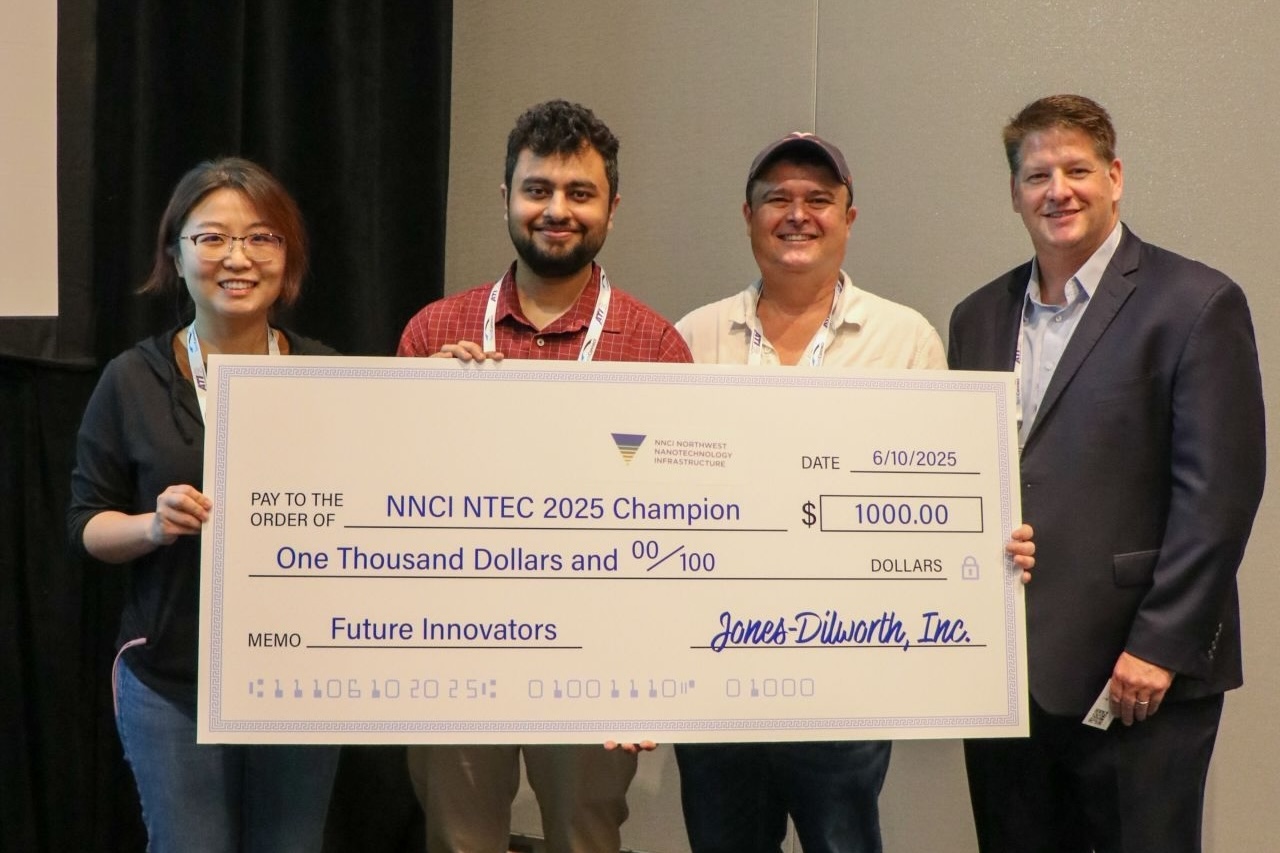
A team from University of Washington Chemical Engineering Professor Lilo Pozzo’s research group took first place in the National Nanotechnology Coordinated Infrastructure (NNCI) NanoTechnology Entrepreneurship Challenge (NTEC), held during the Future Innovations session on March 11 at TechConnect in Raleigh, North Carolina. 

The NNCI NTEC supports student and post-doc-led nanotechnology innovation and entrepreneurship. Lasting for seven weeks, the virtual, self-paced program concludes with a pitch event where teams present their progress to business leaders. 

Led by CoMotion Postdoctoral Entrepreneurship Fellow Kevin Lee and PhD student Zach Wylie, the winning project from the Pozzo Research Group involves the development of next generation high-power-density battery electrodes for power-hungry applications that traditionally relied on diesel. The group will use the $2,500 award from NNCI to continue development and validation of their technology based on the group’s proprietary nanoparticles. 

“Through customer-discovery work conducted with NNCI’s NTEC program, we’ve gained a clear understanding of the pain points faced by legacy battery manufacturers,” says Lee and Wylie.  

Looking ahead, Lee and Wylie “plan on using NNCI’s facilities such as the Molecular Analysis Facility (MAF) and Washington Nanofabrication Facility (WNF) to characterize our material under industry-relevant conditions and generate data that manufacturers require to evaluate and ultimately adopt our material.”
Clarivate Highly Cited Researchers 2025 list includes four NanoES faculty

David Cobden (physics), David Ginger (chemistry), Charles Marcus (materials science & engineering, physics), and Xiaodong Xu (physics, materials science & engineering) have been recognized for significant influence in their chosen field or fields of research through the publication of multiple papers in the top 1% of citations over the last decade.

Ayokunle Olanrewaju earns NIH Maximizing Investigators’ Research Award

NanoES faculty member Ayokunle Olanrewaju (bioengineering and mechanical engineering) has earned a Maximizing Investigators’ Research Award from the National Institutes of Health’s National Institute of General Medical Sciences. The $2.1 million grant is for five years. Often referred to as “R35 awards,” these grants support broad research programs over the course of several years, providing the nation’s most talented and promising researchers “greater stability…enhancing scientific productivity and the chances for important breakthroughs.”

Ultra-flat optic pushes beyond what was previously thought possible

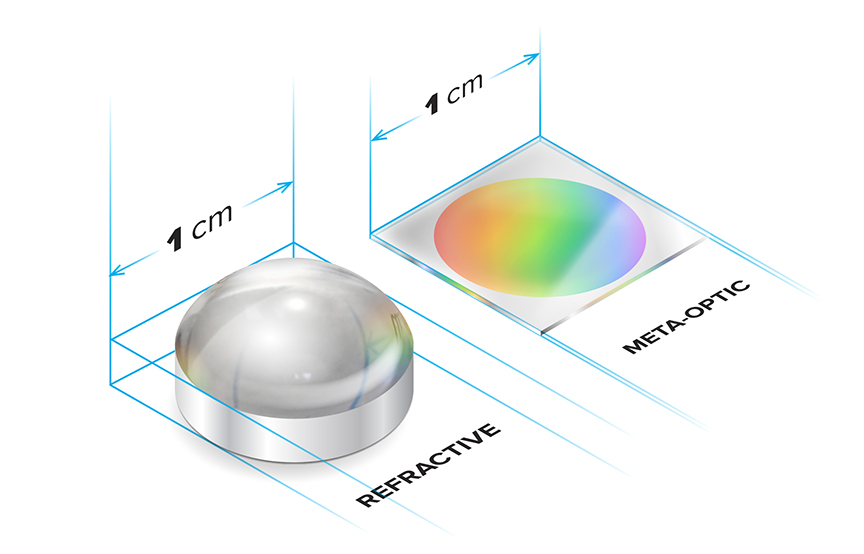
In a first-of-its-kind achievement, a team of researchers at the University of Washington and Princeton University, co-led by NanoES faculty member Arka Majumdar (electrical & computer engineering, physics) and including NanoES director Karl Böhringer (ECE, bioengineering), has shown that a camera containing a large aperture, ultra-flat optic can record high-quality color images and video comparable to what can be captured with a conventional camera lens. The metalens, developed at the Washington Nanofabrication Facility (WNF), is hundreds of times smaller and thinner than a conventional camera lens, offering substantial savings in volume, weight, and device battery life.