Skip to content

Lasers trigger magnetism in atomically thin quantum materials
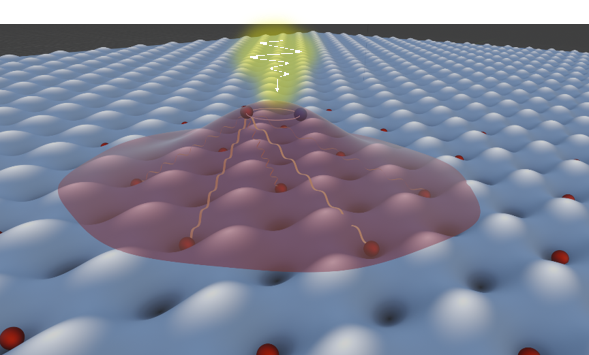
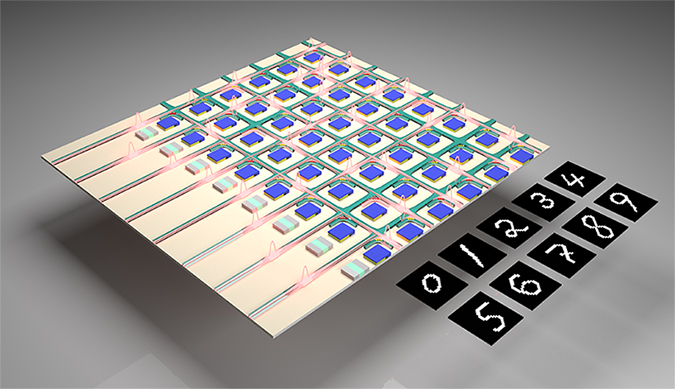
Researchers have discovered that light — from a laser — can trigger a form of magnetism in a normally nonmagnetic material. This magnetism centers on the behavior of electrons “spins,” which have a potential applications in quantum computing. Scientists discovered that electrons within the material became oriented in the same direction when illuminated by photons from a laser. By controlling and aligning electron spins at this level of detail and accuracy, this platform could have applications in quantum computing, quantum simulation and other fields. The experiment, led by scientists at the University of Washington, the University of Hong Kong and the Pacific Northwest National Laboratory, was published April 20 in Nature.

UW researchers developing miniaturized imaging device to treat heart attack, stroke

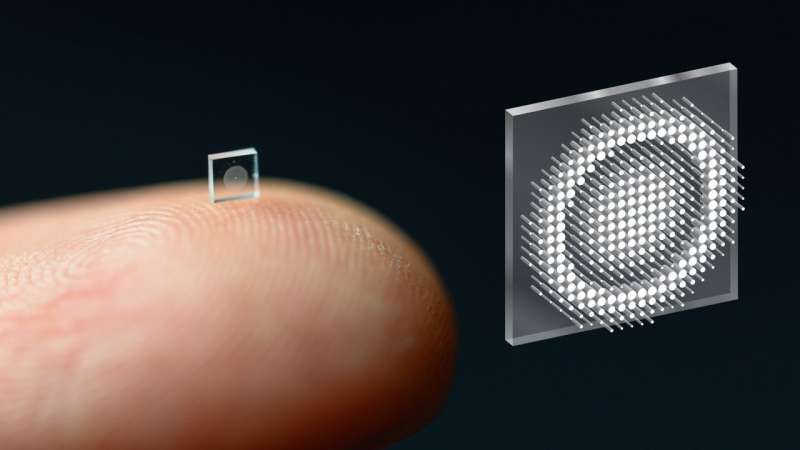
An interdisciplinary research team at the University of Washington, led by Arka Majumdar, an associate professor of electrical and computer engineering and physics, was awarded $3.6 million in funding from the National Science Foundation to use meta-optics to develop a dramatically smaller endoscope that can image previously inaccessible areas of the heart and brain.

Small Business awards from DARPA and NASA fuel growth of UW spinout Tunoptix

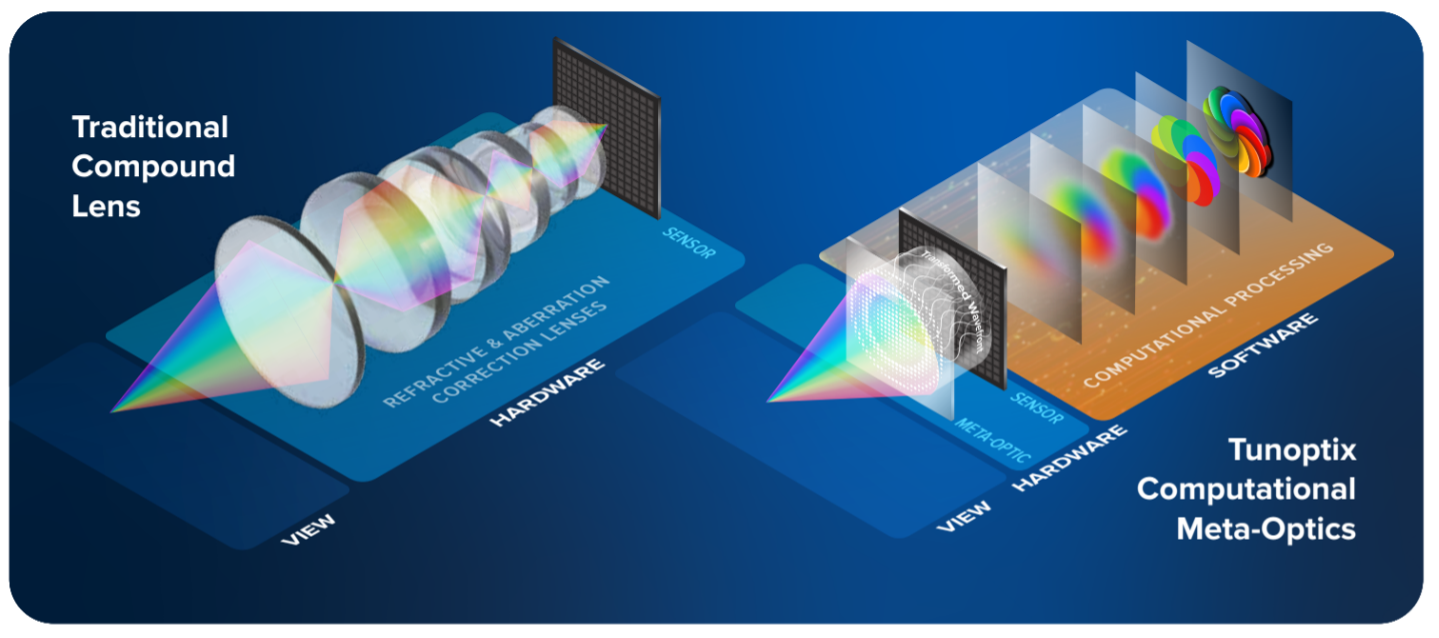
Tunoptix, a Seattle-based optics startup co-founded by University of Washington electrical and computer engineering professors Karl Böhringer and Arka Majumdar, received a $1,500,000 Small Business Technology Transfer (STTR) Phase II award from the Defense Advanced Research Projects Agency (DARPA) and a Small Business Innovation Research (SBIR) Phase I award from NASA to advance their meta-optics imaging systems.

NSF to fund revolutionary center for optoelectronic, quantum technologies

The National Science Foundation has announced it will fund a new endeavor to bring atomic-level precision to the devices and technologies that underpin much of modern life, and will transform fields like information technology in the decades to come. The five-year, $25 million Science and Technology Center grant will found the Center for Integration of Modern Optoelectronic Materials on Demand — or IMOD — a collaboration of scientists and engineers at 11 universities led by the University of Washington.